
How to Confirm Your Floor Is Lifeproof Trail Oak Before Ordering Stair Trim
What "Trail Oak" Has to Be Before Anything Else Matters
Ordering stair trim for a color you have misidentified is the most expensive mistake in this whole process, and it is a common one. Lifeproof sells a large catalog of oak visuals in overlapping tones, and once planks are down and lit by your own fixtures, name recall is unreliable. Before you order anything, the goal is to turn "I think it is Trail Oak" into "the label says Trail Oak."
This article is about reaching that certainty. If you already have it, the Lifeproof Trail Oak stair nose and stair tread page is where the matching work actually gets done.
Where the Color Name Actually Appears
In rough order of reliability:
- The box label. The color name and Home Depot item number are printed together. This is the only source that ties a name to a number without interpretation.
- Your Home Depot order history. If the floor was bought online or on an account, the order record carries the same identifiers.
- The paper receipt. Often abbreviated, but usually enough to search against.
- A leftover plank. No name printed, but a physical reference beats every photograph.
- Memory or a listing you found later. Treat as a hypothesis, not a fact.
If you are renting, bought the house with the floor already installed, or inherited the project from a previous contractor, assume you are at level five and work upward. Checking a closet, the garage, or under the stairs for a spare box is worth twenty minutes before you commit to a trim order.
Colors Trail Oak Gets Confused With
Trail Oak reads as a cool gray-brown with a relatively clean, contemporary grain pattern. That description also fits, loosely, several other oak visuals in the same price bracket — which is exactly why visual identification fails so often.
The distinctions that matter are undertone and grain scale, not overall lightness:
- Undertone. Hold a known-neutral white sheet of paper against the floor in daylight. A cool gray-brown will read slightly blue or green against the paper; a warm one reads yellow or red. Photographs on a phone routinely reverse this, because auto white balance corrects for exactly the cast you are trying to see.
- Grain scale. Measure the distance between major grain lines on a single plank. Two floors can share a color name family and still differ obviously here, and the difference is far more visible on a narrow stair nose than across an open floor.
- Knot and character marks. Note whether they appear on most planks or only occasionally. This varies between visuals in the same collection.
None of this proves a color on its own. It tells you whether your hypothesis survives scrutiny, which is enough to decide whether to keep hunting for the box.
Why Two Pieces of the Same Color Can Still Differ
Even with the name confirmed, an exact-name match is not automatically an exact-appearance match. Two things get in the way:
Production runs. LVP décor films are printed in batches. Colors are held to a tolerance, not to an absolute, and a floor installed three years ago may not be a perfect twin of material produced today. This is normal manufacturing behavior rather than a defect, and it applies to every brand.
Wear and light. An installed floor has been walked on, cleaned, and exposed to whatever light your windows deliver. A new trim piece has not. In a south-facing stairwell the difference is often visible for the first few months and then closes; in a windowless stairwell it may not close at all.
The practical consequence: judge any match in the actual stairwell, in the actual light, at the time of day you use the stairs most. A match approved under a garage fluorescent tube is not evidence of anything.
When a Sample Is Worth the Delay
A sample costs you time. It is worth spending when:
- the floor was installed more than a couple of years ago
- the stairs are the visual centerpiece of an entry or open-plan space
- the stairwell has strong directional daylight
- you could not confirm the color from a label and are working from a hypothesis
- you are ordering enough pieces that a wrong call is expensive to redo
It is usually not worth it when the staircase is enclosed, poorly lit, and short — the conditions that hide small variance anyway.
Color Is Not the Same Question as Coverage
Confirming Trail Oak settles what the piece should look like. It does not settle what piece you need, which is decided by the condition of the stairs:
- Already-finished treads where only the front edge is exposed generally need nose-only trim.
- Carpeted, worn, or construction-grade treads need full-surface coverage, and a stair nose alone will leave the problem visible.
- Open-sided stairs need a return regardless of which of the above applies.
These are independent decisions, and people regularly resolve the color question, order trim, and then discover the coverage question was the one that mattered. The stair nose versus stair tread kit comparison works through it, and the measurement guide covers what to record before ordering either.
If You Cannot Confirm the Color
A hypothesis is still workable, but the approach changes. Send a physical offcut rather than a photograph if you have one; photographs carry white-balance error that no amount of describing can undo. Failing that, photograph the floor in daylight next to a sheet of white paper, include a tape measure across the grain for scale, and say plainly that the color is unconfirmed.
Being upfront that you are not certain changes what gets recommended — usually toward a sample-first path — and that is a better outcome than a confident order against the wrong name.
Next Step
Color confirmed: go to the Lifeproof Trail Oak stair nose and stair tread page.
Still unsure, or want the whole project reviewed first: send your floor and stair details in and StairMatch will review the match path before quoting.
For the wider brand picture, the Lifeproof stair hub covers every color, profile, and tread option in one place.
Frequently Asked Questions
Not sure what fits your floor?
Tell StairMatch what flooring you already own and see the matching stair options on file, or send it for a custom match review.
Products Mentioned in This Article
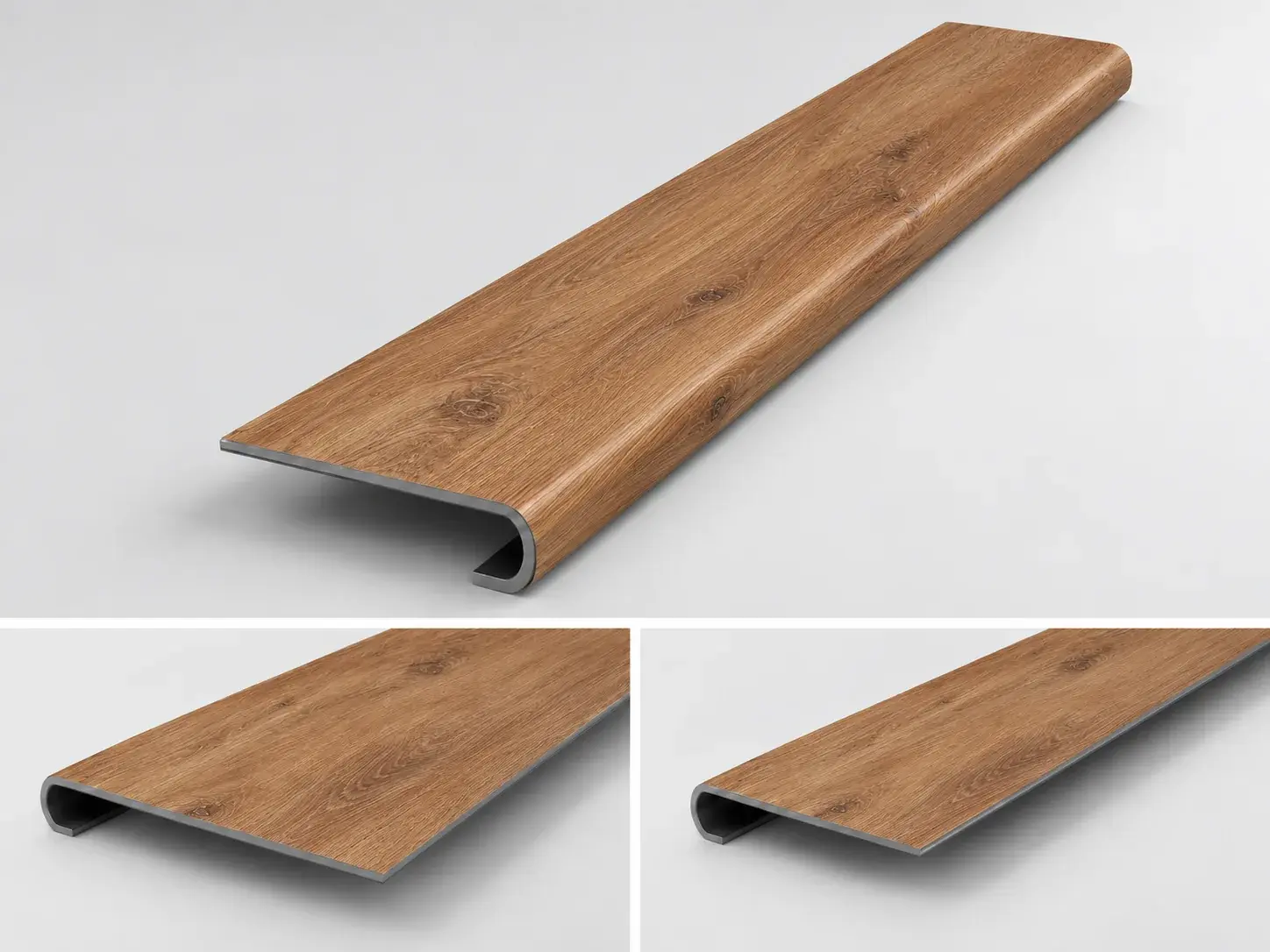
Lifeproof Trail Oak Stair Nose & Stair Tread
Custom-matched stair nosing for Lifeproof Trail Oak LVP flooring.
Match reviewed from your flooring details
Custom LVP Stair Nose — Order by Flooring SKU
Can't find your color? Submit your flooring brand, color name, and SKU — we'll custom-match a stair nose for you.
Related Articles
Lifeproof LVP Stair Nose Colors: Full List of Available Matches
We match stair noses for dozens of Lifeproof LVP colors. Here is the full list of available matches — and how to order a custom match if yours is not listed.
Why Does My LVP Stair Nose Not Match My Floor?
You ordered what looked like a matching stair nose and it doesn't look right. Here are the most common reasons and how to fix them.
Do I Need a Stair Nose on the Top Step?
The top step is often the most visible part of your staircase. Skipping the stair nose here is the most common finishing mistake homeowners make.